
Introduction
Financing options for cosmetic dental work guest author guidelines – A healthy and attractive smile can improve confidence, enhance first impressions, and contribute to better oral health. Cosmetic dental treatments have become more accessible than ever, allowing people to correct stained, chipped, crooked, or missing teeth with advanced procedures. However, these treatments often come with significant costs, making affordability a major concern for many patients.
Fortunately, there are several financing options available for cosmetic dental work. From in-house payment plans and personal loans to healthcare financing companies and flexible spending accounts, patients now have multiple ways to spread treatment costs into manageable monthly payments.
At the same time, there is growing demand for trustworthy information about cosmetic dentistry, dental financing, oral healthcare, and insurance. Our platform welcomes qualified professionals who can share valuable insights with readers through well-researched guest articles. Whether you are a dentist, financial advisor, insurance expert, or healthcare writer, we invite you to contribute your expertise by following our guest author guidelines.
This comprehensive guide explains the most popular financing options for cosmetic dental work while outlining everything prospective guest contributors need to know before submitting an article.
What Is Cosmetic Dental Work?
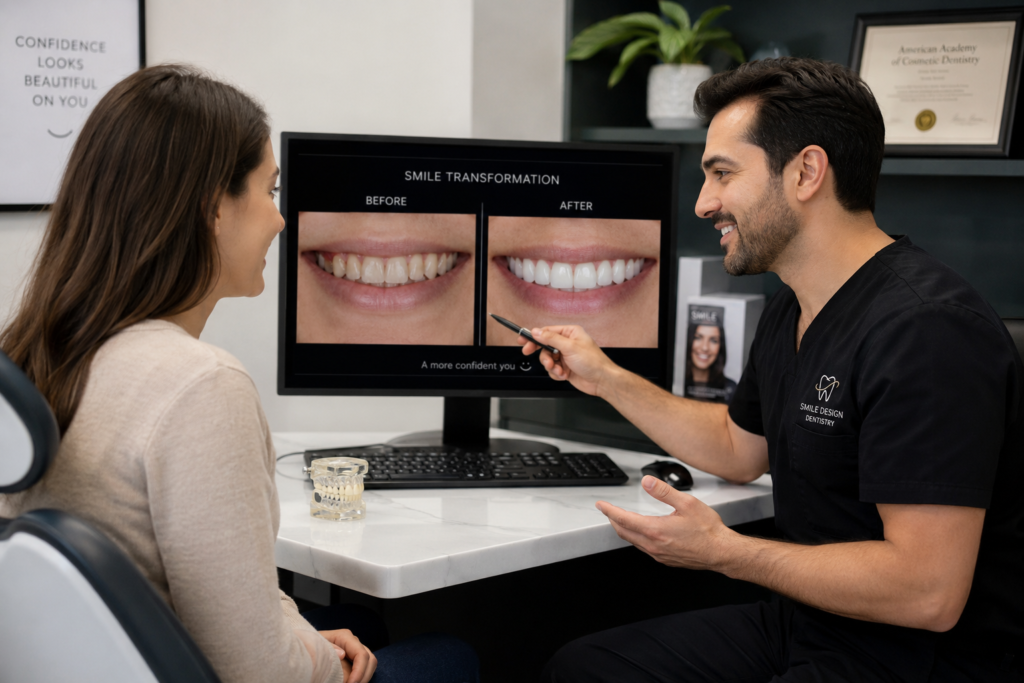
Cosmetic dentistry focuses on improving the appearance of teeth, gums, and smiles. While many cosmetic procedures also provide functional benefits, their primary goal is to enhance aesthetics.
Modern cosmetic dentistry combines advanced technology with personalized treatment plans to create natural-looking results that can last for many years.
Some cosmetic treatments require only one appointment, while others involve several visits over multiple months depending on the complexity of the procedure.
Benefits of Cosmetic Dentistry
Cosmetic dental treatments offer more than just an improved smile. They can positively impact many aspects of daily life.
Benefits include:
- Increased self-confidence
- Improved facial appearance
- Better oral hygiene habits
- Enhanced speech in certain cases
- Easier chewing and eating
- Long-lasting smile improvements
- Better professional and social confidence
- Restoration of damaged teeth
- Reduced wear on surrounding teeth
- Improved overall dental health
Many patients report feeling more comfortable smiling, speaking, and interacting socially after completing cosmetic dental treatment.
Popular Cosmetic Dental Procedures
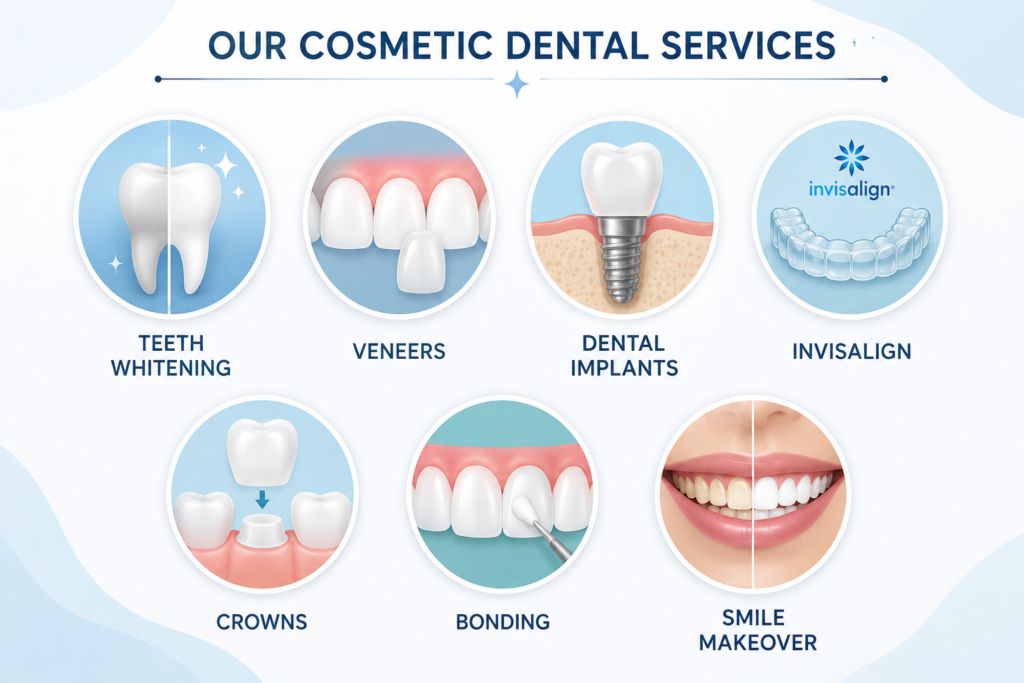
Understanding available cosmetic procedures helps patients choose the most suitable treatment while estimating potential costs.
Teeth Whitening
Professional teeth whitening is among the most popular cosmetic dental treatments. Dentists use high-quality whitening agents to remove stains caused by coffee, tea, smoking, aging, and certain foods.
Average treatment time:
30 to 90 minutes
Results may last several years with proper maintenance.
Dental Veneers
Dental veneers are thin porcelain or composite shells placed over the front surface of teeth.
They are commonly used to correct:
- Discoloration
- Minor gaps
- Chipped teeth
- Uneven teeth
- Slightly crooked teeth
Porcelain veneers provide excellent durability and natural appearance.
Dental Implants
Dental implants permanently replace missing teeth by inserting titanium posts into the jawbone.
Benefits include:
- Natural appearance
- Strong bite force
- Long lifespan
- Bone preservation
- Improved chewing ability
Although implants have higher upfront costs, they are often considered one of the best long-term dental investments.
Invisalign
Invisalign uses clear removable aligners to gradually straighten teeth.
Advantages include:
- Nearly invisible appearance
- Comfortable fit
- Easy cleaning
- Removable trays
- Fewer dental appointments
Many adults choose Invisalign because it offers a discreet alternative to traditional braces.
Dental Crowns
Crowns cover damaged teeth to restore their appearance and strength.
Dentists often recommend crowns after:
- Root canal treatment
- Large fillings
- Tooth fractures
- Severe decay
Crowns can be made from porcelain, ceramic, zirconia, or metal alloys.
Dental Bonding
Dental bonding uses tooth-colored resin to repair minor cosmetic issues.
It is suitable for:
- Small chips
- Tiny gaps
- Minor cracks
- Tooth reshaping
Bonding is generally one of the most affordable cosmetic procedures.
Smile Makeover
A smile makeover combines multiple cosmetic treatments into one customized treatment plan.
It may include:
- Whitening
- Veneers
- Implants
- Orthodontics
- Crowns
- Gum contouring
Every smile makeover is tailored to the patient’s goals and oral health condition.
Average Cost of Cosmetic Dental Work
Treatment costs vary depending on several factors, including location, dentist experience, clinic reputation, materials used, and procedure complexity.
| Procedure | Average Cost (USD) | Typical Treatment Duration |
|---|---|---|
| Teeth Whitening | $300–$800 | One visit |
| Dental Bonding | $150–$600 per tooth | One visit |
| Porcelain Veneers | $900–$2,500 per tooth | 2–3 visits |
| Composite Veneers | $250–$1,500 per tooth | 1–2 visits |
| Dental Crown | $800–$2,000 | 2 visits |
| Dental Implant | $3,000–$6,000 per tooth | Several months |
| Invisalign | $3,000–$8,000 | 6–18 months |
| Smile Makeover | $5,000–$30,000+ | Varies |
Prices differ significantly between countries and individual dental clinics.
Why Cosmetic Dentistry Can Be Expensive
Many patients wonder why cosmetic dental procedures cost more than routine dental care.
Several factors influence pricing.
Advanced Technology
Modern clinics invest in:
- Digital scanners
- 3D imaging
- CAD/CAM systems
- Laser equipment
- High-end dental laboratories
These technologies improve treatment quality but also increase operating costs.
Premium Materials
High-quality materials such as porcelain, zirconia, ceramic, and titanium provide superior durability and aesthetics.
Premium materials naturally cost more than standard alternatives.
Specialist Expertise
Cosmetic dentists undergo extensive training beyond general dentistry.
Years of education, certifications, and clinical experience contribute to treatment pricing.
Customized Treatment Plans
Unlike routine cleanings or fillings, cosmetic procedures are personalized for every patient.
Each smile is unique, requiring detailed planning and customization.
Laboratory Fees
Dental laboratories fabricate crowns, veneers, bridges, and implant restorations with precision.
These custom-made restorations require skilled technicians and advanced manufacturing processes.
Why Financing Matters
Not everyone has thousands of dollars available for immediate treatment.
Without financing, many patients postpone necessary procedures for years.
Financing provides several important advantages.
Immediate Treatment
Patients receive treatment now instead of waiting until they save enough money.
Affordable Monthly Payments
Instead of paying one large amount, financing spreads costs over manageable monthly installments.
Better Oral Health
Delaying treatment can allow minor dental problems to become more severe and expensive.
Early treatment often reduces future dental expenses.
Improved Quality of Life
A healthy smile can improve confidence, communication, eating habits, and overall well-being.
Financing helps patients achieve these benefits sooner.
Who Should Consider Financing?
Financing may be suitable for:
- Patients needing dental implants
- Individuals considering veneers
- Adults seeking Invisalign treatment
- People planning a complete smile makeover
- Patients replacing multiple missing teeth
- Individuals without dental insurance
- Families managing multiple dental treatments
- Self-employed individuals seeking flexible payment options
The right financing solution depends on personal financial circumstances, treatment cost, and repayment preferences.
Main Financing Options Available
Patients generally have several financing choices available.
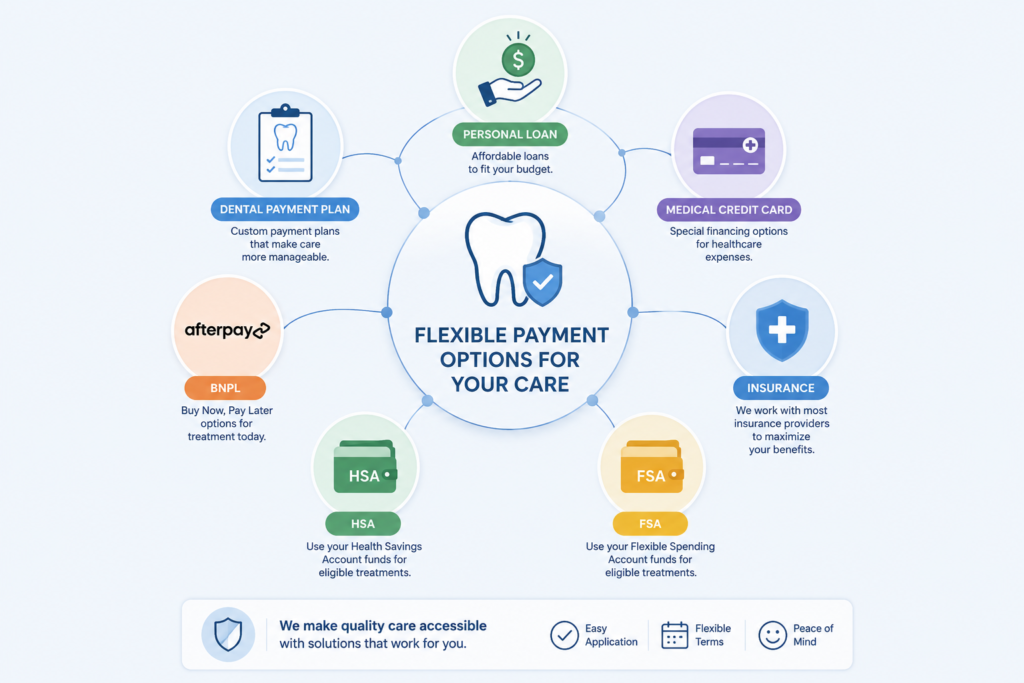
These include:
- In-house dental payment plans
- Personal loans
- Healthcare financing companies
- Medical credit cards
- Buy Now, Pay Later services
- Dental insurance (where applicable)
- Flexible Spending Accounts (FSA)
- Health Savings Accounts (HSA)
- Employer healthcare benefits
- Family assistance or savings
Each option has different eligibility requirements, repayment periods, interest rates, and approval processes.
Understanding these differences helps patients make informed financial decisions while avoiding unnecessary debt.
In the next section, we will explore each financing option in detail, compare their advantages and disadvantages, explain eligibility requirements, and help readers determine which solution best fits their budget and treatment goals.
Financing Options for Cosmetic Dental Work
The cost of cosmetic dental procedures can seem overwhelming, but several financing solutions make treatment more affordable. Choosing the right option depends on your financial situation, credit history, treatment cost, and repayment preferences.
Before signing any financing agreement, compare interest rates, repayment periods, processing fees, and early repayment options.
1. In-House Dental Payment Plans
Many dental clinics offer payment plans directly to patients. Instead of paying the full treatment cost upfront, patients make monthly payments over an agreed period.
These plans are popular because they are simple and often require minimal paperwork.
Benefits
- Quick approval process
- Convenient monthly payments
- No third-party lender
- Flexible repayment schedules
- May offer interest-free periods
- Easy communication with the dental clinic
Drawbacks
- Available only at participating clinics
- Shorter repayment terms
- Higher monthly payments for expensive treatments
- Late payment penalties may apply
Best For
- Teeth whitening
- Veneers
- Crowns
- Moderate cosmetic procedures
- Patients with limited credit history
2. Personal Loans
Personal loans are one of the most common financing methods for cosmetic dental work.
Banks, credit unions, and online lenders provide fixed loan amounts that can be used for medical or dental expenses.
Loan amounts usually range from a few hundred dollars to tens of thousands of dollars.
Advantages
- Fixed monthly payments
- Predictable interest rates
- Longer repayment terms
- Can finance multiple treatments
- No restrictions on clinic selection
Disadvantages
- Credit approval required
- Interest charges
- Processing time
- Possible origination fees
Best For
- Smile makeovers
- Dental implants
- Invisalign
- Full-mouth restoration
3. Medical Credit Cards
Medical credit cards are specifically designed for healthcare expenses, including cosmetic dentistry.
Many providers offer promotional interest-free periods if the balance is paid within a specified timeframe.
Benefits
- Immediate approval in many cases
- Promotional financing offers
- Accepted at thousands of dental clinics
- Flexible payment options
Potential Risks
- High interest after promotional period
- Missed payment penalties
- Deferred interest conditions
- Credit utilization impacts
Patients should always read the financing agreement carefully before accepting promotional offers.
4. Healthcare Financing Companies
Several companies specialize in financing medical and dental treatments.
These organizations work directly with dental clinics to offer customized repayment plans.
Features often include:
- Instant online approval
- Multiple repayment options
- Competitive interest rates
- Financing for expensive procedures
- Flexible loan amounts
Healthcare financing companies can be an excellent solution for patients requiring complex treatment plans.
5. Buy Now, Pay Later (BNPL)
Buy Now, Pay Later services have expanded into healthcare and cosmetic dentistry.
Patients divide treatment costs into smaller installments without paying the full amount immediately.
Advantages
- Fast application
- Small installment payments
- Convenient online management
- Sometimes interest-free
Limitations
- Lower financing limits
- Short repayment periods
- Late payment fees
- Not available at every dental clinic
BNPL works best for lower-cost cosmetic procedures rather than complete smile transformations.
6. Dental Insurance
Traditional dental insurance typically focuses on preventive and medically necessary procedures.
Purely cosmetic treatments are usually excluded.
However, partial coverage may exist when cosmetic treatment also restores function.
Examples include:
- Crowns after injury
- Tooth reconstruction
- Medically necessary implants
- Trauma-related restorations
Always verify benefits with your insurance provider before beginning treatment.
7. Flexible Spending Accounts (FSA)
An FSA allows employees to set aside pre-tax income for eligible healthcare expenses.
Depending on local tax regulations and treatment eligibility, certain dental procedures may qualify.
Benefits include:
- Tax savings
- Reduced out-of-pocket costs
- Easy reimbursement
- Employer-supported plans
Patients should review plan documentation to determine eligible treatments.
8. Health Savings Accounts (HSA)
Individuals enrolled in qualifying health plans may contribute pre-tax money into an HSA.
Funds can often be used for eligible dental expenses.
Advantages include:
- Tax-free contributions
- Tax-free withdrawals for qualified expenses
- Funds roll over annually
- Long-term healthcare savings
Unlike FSAs, unused HSA balances generally remain available year after year.
9. Credit Cards
Some patients choose traditional credit cards for cosmetic dental treatment.
This option offers convenience but should be used carefully.
Pros
- Immediate payment
- Rewards programs
- Flexible repayment
- Emergency funding
Cons
- High interest rates
- Minimum payment traps
- Increased debt
- Credit score impact
Paying off the balance quickly helps reduce interest costs.
10. Home Equity Loans
Homeowners with sufficient equity may borrow against their property to finance extensive dental work.
These loans often provide lower interest rates than unsecured loans.
However, the home serves as collateral.
This option should only be considered after consulting a qualified financial advisor.
11. Employer Healthcare Benefits
Some employers provide healthcare reimbursement programs or wellness benefits that may help offset certain dental expenses.
Employees should review:
- Healthcare reimbursement accounts
- Wellness allowances
- Supplemental insurance
- Employee assistance programs
Although cosmetic procedures may not always qualify, partial reimbursement is possible in specific circumstances.
Comparing Financing Options
| Financing Option | Approval Speed | Monthly Payments | Interest Potential | Best For |
|---|---|---|---|---|
| In-house Payment Plan | Very Fast | Fixed | Low to Moderate | Small and medium treatments |
| Personal Loan | Moderate | Fixed | Moderate | Large procedures |
| Medical Credit Card | Fast | Flexible | Low during promotions | Cosmetic treatments |
| Healthcare Financing | Fast | Flexible | Varies | High-cost procedures |
| BNPL | Instant | Short-term | Often Low | Lower-cost treatments |
| Credit Card | Instant | Flexible | High | Emergency payments |
| HSA/FSA | Immediate | Not Applicable | None | Eligible medical expenses |
Factors to Consider Before Choosing Financing
Every financing option has advantages and disadvantages.
Before making a decision, evaluate the following factors carefully.
Interest Rate
A lower interest rate reduces the total repayment amount.
Even a small difference in interest rates can significantly affect long-term borrowing costs.
Loan Duration
Longer repayment periods reduce monthly payments but increase total interest paid.
Shorter repayment terms usually save money overall.
Processing Fees
Some lenders charge:
- Application fees
- Processing fees
- Administration charges
- Early settlement fees
Always calculate the total borrowing cost rather than focusing only on monthly payments.
Credit Score
Your credit history influences:
- Approval chances
- Interest rates
- Loan limits
- Financing terms
Improving your credit score before applying may help secure better financing options.
Down Payment
Some financing providers require an initial payment before approving treatment financing.
A larger down payment generally reduces monthly installments.
Early Repayment Policy
Check whether you can repay the loan early without penalties.
Many borrowers prefer flexible repayment options that allow faster debt reduction.
Hidden Charges
Read the agreement carefully.
Watch for:
- Late payment fees
- Deferred interest clauses
- Service charges
- Annual fees
- Account maintenance fees
Transparency is essential before signing any financing contract.
Questions to Ask Your Dentist Before Financing
Before agreeing to treatment, ask questions such as:
- What is the total treatment cost?
- Are there additional laboratory fees?
- Is financing available directly through your clinic?
- Are interest-free payment plans offered?
- How long is the repayment period?
- Are there penalties for late payments?
- Can I pay off the balance early?
- Are follow-up appointments included?
- What happens if additional treatment becomes necessary?
Clear communication helps patients avoid unexpected expenses.
Tips for Getting Approved
Financing approval becomes easier when applicants prepare in advance.
Helpful tips include:
- Maintain a good credit score.
- Pay existing debts on time.
- Reduce outstanding credit balances.
- Verify your income documentation.
- Compare multiple financing providers.
- Avoid applying for several loans simultaneously.
- Review your credit report for errors.
Preparation improves approval chances while helping secure better loan terms.
Common Financing Mistakes to Avoid
Many patients make avoidable mistakes when financing cosmetic dental work.
Avoid these common errors:
- Choosing the first financing offer without comparison.
- Ignoring interest rates.
- Borrowing more than necessary.
- Missing monthly payments.
- Overlooking hidden fees.
- Failing to read financing agreements.
- Selecting repayment periods that strain the budget.
- Assuming insurance covers cosmetic procedures.
Making informed financial decisions protects both your oral health and long-term financial well-being.
In the next section, we’ll explore practical ways to reduce cosmetic dental costs, compare treatment value, answer the most frequently asked questions, and provide comprehensive guest author guidelines for healthcare professionals interested in contributing to our platform.
How to Save Money on Cosmetic Dental Work
Improving your smile does not always mean paying the highest possible price. With careful planning and smart financial decisions, patients can significantly reduce treatment costs while still receiving quality care.
Compare Multiple Dental Clinics
Never choose the first clinic you visit.
Schedule consultations with several qualified dentists and compare:
- Treatment plans
- Procedure costs
- Materials used
- Financing options
- Warranties
- Follow-up care
- Patient reviews
A detailed comparison helps you identify the best value rather than simply the lowest price.
Ask About Package Discounts
Many dental clinics offer discounted pricing when multiple procedures are completed together.
For example, a smile makeover may include:
- Teeth whitening
- Veneers
- Crowns
- Gum contouring
Bundled treatments are often more affordable than scheduling each procedure separately.
Consider Dental Schools
Accredited dental schools frequently provide cosmetic procedures at reduced prices.
Treatments are performed by supervised dental students under the guidance of experienced faculty members.
Benefits include:
- Lower costs
- Modern equipment
- Professional supervision
- High treatment standards
Patients should understand that appointments may take longer than at private clinics.
Schedule Treatment During Promotions
Many clinics offer seasonal promotions throughout the year.
Discounts may be available during:
- Holiday promotions
- Anniversary sales
- Smile makeover campaigns
- New clinic openings
Ask your dentist whether any upcoming offers are available before beginning treatment.
Maintain Excellent Oral Hygiene
Preventive care reduces the need for expensive restorative procedures.
Simple daily habits include:
- Brushing twice daily
- Flossing every day
- Using fluoride toothpaste
- Limiting sugary foods
- Attending regular dental checkups
Healthy teeth often require fewer cosmetic corrections in the future.
Verify Insurance Benefits
Although many cosmetic procedures are excluded from standard insurance policies, some treatments may receive partial coverage if they restore function.
Always request a written explanation of benefits before starting treatment.
Use Tax-Advantaged Healthcare Accounts
If eligible, paying through an FSA or HSA can reduce your overall healthcare costs because contributions are often made using pre-tax income.
Consult your plan administrator to determine which dental procedures qualify.
Is Cosmetic Dental Financing Worth It?
The answer depends on your financial situation, treatment goals, and long-term priorities.
Financing may be worthwhile if:
- Monthly payments comfortably fit your budget.
- Treatment improves both function and appearance.
- Delaying care could worsen dental problems.
- Promotional financing offers low or zero interest.
- The procedure provides long-lasting results.
Financing may not be appropriate if:
- Monthly payments create financial stress.
- Interest rates are excessively high.
- Emergency savings would be depleted.
- The treatment is purely optional and unaffordable.
Responsible borrowing is essential. Patients should choose financing only after carefully reviewing all costs and repayment obligations.
Risks of Cosmetic Dental Financing
Like any financial commitment, dental financing carries potential risks.
Understanding these risks helps patients make informed decisions.
High Interest Costs
Some financing options charge significant interest if promotional periods expire before the balance is paid.
Missed Payments
Late payments may result in:
- Additional fees
- Increased interest
- Negative credit reporting
Overborrowing
Financing larger treatment plans than necessary can increase long-term debt.
Patients should prioritize procedures based on clinical recommendations rather than cosmetic preferences alone.
Hidden Charges
Some financing agreements include:
- Processing fees
- Account maintenance fees
- Annual fees
- Early repayment penalties
Always read every section of the agreement before signing.
Choosing the Right Dentist
Selecting an experienced cosmetic dentist is just as important as choosing the right financing option.
Look for dentists who offer:
- Extensive cosmetic dentistry experience
- Before-and-after case galleries
- Positive patient reviews
- Transparent pricing
- Digital treatment planning
- Clear financing explanations
- Written treatment estimates
A trustworthy dental professional will answer questions honestly and explain every available payment option.
Frequently Asked Questions
Is cosmetic dental work covered by insurance?
Most cosmetic procedures are not fully covered by dental insurance. However, treatments that restore oral function may qualify for partial reimbursement depending on your policy.
Can I finance dental implants?
Yes. Dental implants are commonly financed through payment plans, healthcare financing companies, personal loans, and medical credit programs.
Are veneers worth financing?
For many patients, veneers provide long-lasting cosmetic improvements. Financing can make treatment more affordable through manageable monthly payments.
What credit score is needed for dental financing?
Requirements vary by lender. Higher credit scores generally qualify for better interest rates and financing terms.
Can I finance Invisalign treatment?
Yes. Most orthodontic clinics offer financing plans for Invisalign treatment.
Are payment plans interest-free?
Some clinics provide promotional interest-free financing for a limited period. Terms vary by provider.
How long do dental payment plans last?
Repayment periods may range from several months to several years depending on the financing provider and treatment cost.
Can self-employed individuals qualify?
Yes. Self-employed applicants can often qualify by providing proof of income and meeting lender requirements.
Is cosmetic dentistry tax deductible?
Tax rules vary by country. Purely cosmetic procedures are often not deductible, while medically necessary treatments may qualify. Consult a qualified tax professional for guidance.
What happens if I miss a payment?
Missed payments may lead to late fees, increased interest charges, or negative effects on your credit history.
Should I choose the cheapest financing option?
Not necessarily. Consider the total borrowing cost, repayment flexibility, customer support, and loan conditions instead of focusing only on monthly payments.
Can I repay my loan early?
Many financing providers allow early repayment, although some may charge prepayment fees. Always review the agreement carefully.
Are online lenders safe?
Many reputable online lenders offer secure financing. Verify licensing, reviews, and terms before applying.
Is cosmetic dentistry a good investment?
Many patients believe improved confidence, appearance, and oral health make cosmetic dentistry a worthwhile long-term investment.
Final Thoughts
Cosmetic dental procedures can dramatically improve both appearance and confidence, but treatment costs often discourage patients from taking the first step.
Fortunately, modern financing solutions provide flexible ways to spread costs into affordable monthly payments. Whether you choose an in-house payment plan, personal loan, healthcare financing company, or tax-advantaged healthcare account, comparing multiple options is essential.
Before making a financial commitment, carefully review interest rates, repayment terms, hidden fees, and eligibility requirements. Discuss every available option with your dentist and ensure the repayment plan fits comfortably within your monthly budget.
An informed financing decision allows patients to achieve a healthier, more confident smile without unnecessary financial stress.
Guest Author Guidelines
We welcome knowledgeable writers, dentists, orthodontists, healthcare professionals, insurance specialists, financial advisors, researchers, and experienced medical writers who can provide valuable, evidence-based content related to cosmetic dentistry and dental financing.
Our goal is to publish informative, trustworthy, and reader-focused articles that help individuals make better healthcare and financial decisions.
Who Can Contribute?
We accept guest contributions from:
- Licensed Dentists
- Cosmetic Dentists
- Orthodontists
- Dental Hygienists
- Oral Surgeons
- Healthcare Professionals
- Financial Advisors
- Medical Writers
- Insurance Experts
- Dental Practice Owners
- Healthcare Researchers
- Experienced Health Bloggers
Contributors should demonstrate subject knowledge and provide accurate, well-supported information.
Topics We Accept
We welcome original articles on topics including:
- Cosmetic Dentistry
- Dental Implants
- Veneers
- Invisalign
- Teeth Whitening
- Smile Makeovers
- Dental Insurance
- Dental Financing
- Personal Finance for Healthcare
- Healthcare Loans
- Preventive Dentistry
- Oral Hygiene
- Dental Technology
- Dental Practice Management
- Patient Education
- Healthcare Innovation
- Dental Marketing
- Oral Health Research
We prioritize educational content that helps readers solve real-world problems.
Guest Author Guidelines
Content Requirements
We publish high-quality, original articles that provide practical value to our readers. Every submission is reviewed by our editorial team before publication.
To maintain quality, guest authors must follow these requirements:
- Content must be 100% original.
- Articles must not have been published elsewhere.
- AI-assisted writing is acceptable only if thoroughly edited by a human and fact-checked.
- Content must be free from plagiarism.
- Promotional or sales-focused articles will not be accepted.
- Every article should provide actionable advice backed by credible sources.
- Grammar and spelling should be carefully reviewed before submission.
Recommended Article Length
We prefer comprehensive articles rather than short blog posts.
Recommended length:
- Minimum: 1,500 words
- Preferred: 2,500–4,000 words
- Ultimate guides: 4,000–6,000+ words
Long-form content generally provides more value and performs better in search engines when written with quality and depth.
Content Formatting Guidelines
To improve readability, please structure your article using clear headings and short paragraphs.
Your article should include:
- One H1 title
- Multiple H2 headings
- Relevant H3 subheadings
- Short paragraphs
- Bullet points
- Numbered lists where appropriate
- Tables for comparisons
- Practical examples
- A concise conclusion
Avoid large blocks of text.
Writing Style
We encourage a writing style that is:
- Professional
- Informative
- Easy to understand
- Reader-focused
- Free from unnecessary jargon
Write for both beginners and experienced readers. Explain technical terms clearly whenever they are introduced.
Accuracy and Fact-Checking
All factual claims should be accurate and supported by reliable evidence.
Where applicable, include:
- Recent statistics
- Research findings
- Government publications
- Academic references
- Professional industry reports
Do not include misleading claims or unsupported medical advice.
SEO Guidelines
To maximize the visibility of your article, please follow these SEO best practices.
Each submission should include:
- Primary keyword
- Secondary keywords
- SEO-friendly title
- Meta description (150–160 characters)
- Clear heading hierarchy
- Internal linking suggestions
- External references to authoritative websites
- Image ALT text
- FAQ section when relevant
Keyword stuffing is strictly prohibited.
Write naturally for readers first and search engines second.
EEAT Standards
We prioritize content that demonstrates:
Experience
Share practical knowledge and real-world examples whenever possible.
Expertise
Articles should be written by individuals with relevant qualifications or professional experience.
Authoritativeness
Support important claims with trustworthy references.
Trustworthiness
Provide balanced information and avoid exaggerated marketing claims.
Our editorial team may request additional references before publication.
Image Requirements
Images improve reader engagement and help explain complex concepts.
If you submit images:
- Use original graphics whenever possible.
- High-resolution images are preferred.
- Minimum width: 1200 pixels.
- Accepted formats: WebP, PNG, JPEG.
- Include descriptive file names.
- Provide ALT text for accessibility and SEO.
Do not submit copyrighted images without permission.
Tables and Infographics
We strongly encourage visual content such as:
- Comparison tables
- Process diagrams
- Step-by-step flowcharts
- Financial calculators
- Dental procedure timelines
- Cost comparison charts
- Decision trees
Original visuals improve user experience and increase the likelihood of earning backlinks.
Author Bio Guidelines
Each guest author should include a brief biography.
Recommended length:
50–100 words
Please include:
- Full name
- Professional designation
- Organization (if applicable)
- Areas of expertise
- Website (optional)
- LinkedIn profile (optional)
Example:
Jane Smith is a licensed cosmetic dentist with over 15 years of experience helping patients improve their oral health and confidence. She specializes in veneers, dental implants, and smile makeovers while actively educating patients through evidence-based online content.
Backlink Policy
We allow relevant editorial backlinks that genuinely enhance the reader’s experience.
Our backlink policy includes:
- One contextual do-follow link may be permitted, subject to editorial review.
- Links must point to high-quality, relevant websites.
- Affiliate links are generally not accepted.
- Excessive self-promotion is prohibited.
- Keyword-stuffed anchor text may be edited.
- The editorial team reserves the right to remove or modify links.
We do not accept links related to:
- Gambling
- Adult content
- Illegal products
- Fake investment schemes
- Spam websites
- Malware or phishing sites
Editorial Review Process
Every submission follows a structured review process.
Step 1: Submission
Send your completed article along with your author information.
Step 2: Editorial Screening
Our editors review the content for originality, quality, accuracy, and relevance.
Step 3: SEO Optimization
If necessary, our team may improve formatting, headings, metadata, or internal linking while preserving the author’s intent.
Step 4: Fact Verification
Important statistics, financial information, and medical claims are reviewed for accuracy.
Step 5: Publication
Approved articles are scheduled for publication.
Step 6: Promotion
Published articles may be promoted through our website, newsletters, and social media channels.
Reasons an Article May Be Rejected
Submissions may be declined for reasons including:
- Plagiarism
- Duplicate content
- AI-generated text with no human editing
- Poor grammar
- Lack of factual accuracy
- Excessive promotional language
- Thin content
- Irrelevant topic
- Spammy backlinks
- Copyright violations
How to Submit Your Guest Post
Please include the following with your submission:
- Article title
- Google Docs link or Microsoft Word document
- Author name
- Short biography
- Professional headshot (optional)
- Email address
- Website URL (if applicable)
- Social media profiles (optional)
- Images with proper attribution
- Suggested SEO title and meta description
Our editorial team typically reviews submissions within 5–10 business days.
Why Write for Us?
Publishing with us offers several benefits:
- Reach a targeted audience interested in cosmetic dentistry and personal finance.
- Build your professional reputation.
- Showcase your expertise.
- Earn a quality editorial backlink (where applicable).
- Expand your online portfolio.
- Share valuable knowledge with readers worldwide.
We value long-term relationships with knowledgeable contributors and welcome recurring guest authors who consistently provide outstanding content.
Editorial Rights
By submitting an article, you acknowledge that:
- The content is your original work.
- You have permission to use all included images and materials.
- The editorial team may edit formatting, grammar, headings, and SEO elements.
- We reserve the right to decline submissions that do not meet our quality standards.
- Published articles may remain permanently available unless otherwise agreed.
Frequently Asked Questions About Guest Posting
Do you charge for guest posts?
Our editorial team reviews every submission individually. Contact us to discuss collaboration opportunities.
Can I include my website link?
Yes, relevant editorial links may be permitted if they add value to readers and comply with our backlink policy.
How long does the review process take?
Most submissions receive an editorial response within 5–10 business days.
Will you edit my article?
Yes. Minor edits for grammar, formatting, readability, and SEO may be made before publication.
Can I republish my article elsewhere?
No. We publish only original content that has not appeared on other websites.
Conclusion
Cosmetic dental treatments can transform lives by improving confidence, appearance, and oral health. Although these procedures often require a significant financial investment, today’s financing options make quality dental care more accessible than ever. By comparing payment plans, loans, insurance benefits, and healthcare financing programs, patients can choose a solution that fits both their treatment goals and budget.
We are equally committed to publishing reliable, experience-driven content that educates readers about cosmetic dentistry, dental financing, and oral health. If you have professional expertise in these fields, we invite you to contribute a well-researched guest article by following our guidelines.
Together, we can help readers make informed decisions, improve their smiles, and better understand the financial aspects of modern cosmetic dental care.
Natalie Kingsley is the lead author and primary contributor at Fundznests.com. She is passionate about financial education and dedicated to helping readers build confidence in managing their money, growing their wealth, and achieving long-term financial goals.
With a strong interest in personal finance, investing, retirement planning, and wealth-building strategies, Natalie creates informative and practical content designed for both beginners and experienced investors. Her writing focuses on breaking down complex financial concepts into clear, actionable insights that readers can apply to their everyday financial lives.