
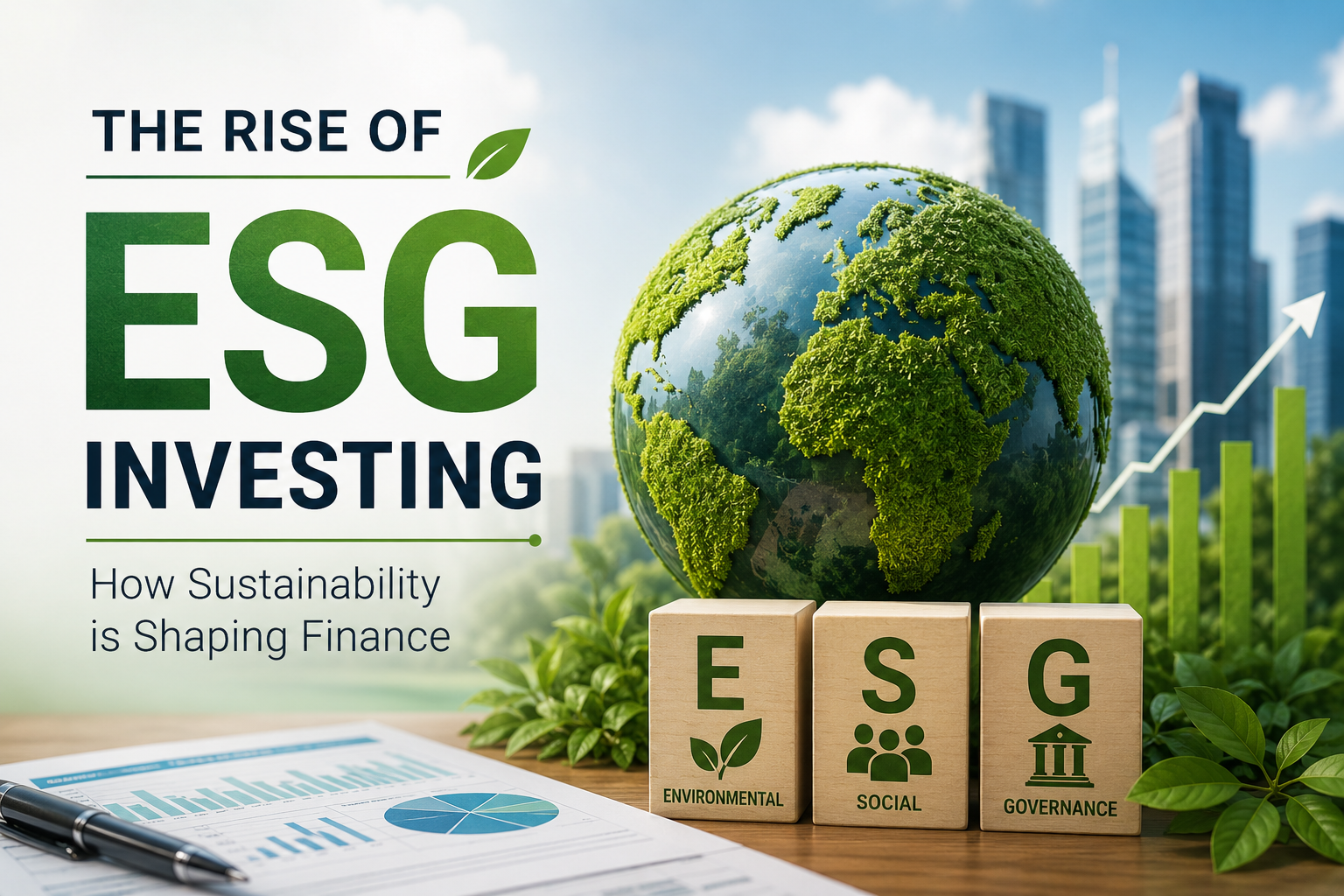
The financial industry has undergone significant changes over the past decade. Investors are no longer focused solely on profits and financial returns. Today, many individuals and institutions want their investments to align with their values and contribute positively to society.
This shift has fueled the rapid growth of ESG investing. ESG stands for Environmental, Social, and Governance, a framework used to evaluate companies beyond traditional financial metrics. Investors increasingly consider sustainability, ethical practices, and corporate responsibility when making investment decisions.
As climate change, social inequality, and corporate transparency become major global concerns, ESG investing has emerged as one of the most influential trends in modern finance.
What is ESG Investing?
ESG investing is an investment strategy that evaluates companies based on three key factors:
Environmental Factors
Environmental criteria assess how a company impacts the natural environment. These factors include:
- Carbon emissions
- Energy efficiency
- Waste management
- Water conservation
- Renewable energy initiatives
- Climate change policies
Companies with strong environmental practices are often viewed as better prepared for future regulations and environmental challenges.
Social Factors
Social criteria focus on how a company manages relationships with employees, customers, suppliers, and communities.
Important social considerations include:
- Employee welfare
- Workplace diversity
- Human rights practices
- Consumer protection
- Community engagement
- Labor standards
Organizations that prioritize social responsibility often enjoy stronger brand loyalty and employee satisfaction.
Governance Factors
Governance evaluates how a company is managed and controlled.
Key governance metrics include:
- Board diversity
- Executive compensation
- Corporate ethics
- Transparency
- Shareholder rights
- Risk management
Strong governance practices help reduce corporate scandals and improve long-term stability.
Why ESG Investing is Growing Rapidly
Several factors have contributed to the rise of ESG investing worldwide.
Increased Awareness of Climate Change
Climate-related risks have become impossible to ignore. Extreme weather events, rising sea levels, and environmental degradation have prompted investors to consider sustainability risks.
Companies that fail to address environmental concerns may face:
- Regulatory penalties
- Operational disruptions
- Reputational damage
- Reduced profitability
As a result, investors are increasingly directing capital toward businesses that demonstrate environmental responsibility.
Changing Investor Preferences
Millennials and Generation Z investors are driving a significant shift in investment behavior.
These younger investors often prioritize:
- Sustainability
- Ethical business practices
- Social impact
- Long-term value creation
Many prefer investing in companies that align with their personal values rather than focusing solely on short-term profits.
Regulatory Support
Governments and financial regulators around the world are encouraging greater ESG disclosure.
Many jurisdictions now require companies to provide information regarding:
- Carbon emissions
- Diversity initiatives
- Sustainability goals
- Climate-related risks
Improved transparency makes it easier for investors to assess ESG performance.
Better Access to ESG Data
Technology and advanced analytics have improved access to sustainability information.
Today, investors can use ESG ratings, sustainability reports, and data platforms to evaluate companies more effectively.
This increased availability of information has accelerated ESG adoption across the financial sector.
Benefits of ESG Investing
Potential for Strong Long-Term Returns
Contrary to the belief that sustainable investing sacrifices returns, numerous studies suggest that companies with strong ESG practices often perform competitively over the long term.
These companies may benefit from:
- Better risk management
- Operational efficiency
- Stronger customer loyalty
- Enhanced reputation
Reduced Investment Risk
ESG analysis helps investors identify hidden risks that traditional financial analysis may overlook.
Examples include:
- Environmental liabilities
- Labor disputes
- Governance failures
- Regulatory challenges
By considering these factors, investors can make more informed decisions.
Positive Social Impact
ESG investing enables individuals and institutions to support companies that contribute positively to society.
Investors can promote:
- Cleaner energy
- Fair labor practices
- Diversity and inclusion
- Responsible corporate behavior
This creates a financial system that encourages sustainable development.
Enhanced Corporate Accountability
As investors demand greater transparency, companies become more accountable for their actions.
This pressure often leads to:
- Improved governance
- Better environmental practices
- Greater social responsibility
Ultimately, ESG investing encourages businesses to operate more ethically.
Popular ESG Investment Strategies
Negative Screening
This approach excludes companies involved in industries that conflict with investor values.
Common exclusions include:
- Tobacco
- Weapons
- Fossil fuels
- Gambling
- Alcohol
Positive Screening
Positive screening focuses on selecting companies with strong ESG performance relative to their peers.
Investors actively seek organizations that demonstrate leadership in sustainability.
Impact Investing
Impact investing aims to generate measurable social or environmental benefits alongside financial returns.
Examples include investments in:
- Renewable energy
- Affordable housing
- Sustainable agriculture
- Healthcare accessibility
ESG Integration
ESG integration combines sustainability factors with traditional financial analysis.
Many professional fund managers use this approach to create balanced investment portfolios.
Challenges Facing ESG Investing
Despite its popularity, ESG investing faces several challenges.
Lack of Standardization
Different ESG rating agencies often use different methodologies.
As a result:
- Company ratings may vary significantly
- Investors may receive conflicting information
- Comparisons can be difficult
Greenwashing
Greenwashing occurs when companies exaggerate or misrepresent their sustainability efforts.
Some businesses promote environmentally friendly initiatives while continuing harmful practices behind the scenes.
Investors must conduct thorough research to identify genuine ESG leaders.
Data Quality Issues
ESG data is not always complete or consistent.
Many companies report sustainability information voluntarily, leading to variations in disclosure quality.
Improved reporting standards are needed to address this issue.
Balancing Returns and Values
Investors sometimes face trade-offs between maximizing financial returns and supporting ethical objectives.
Each investor must determine the appropriate balance based on their goals and risk tolerance.
ESG Investing Across Different Asset Classes
Stocks
ESG-focused equity funds invest in companies that meet specific sustainability criteria.
These funds have become increasingly popular among retail and institutional investors.
Bonds
Green bonds and sustainability-linked bonds finance projects that deliver environmental or social benefits.
Common projects include:
- Renewable energy development
- Energy-efficient infrastructure
- Clean transportation systems
Real Estate
Sustainable real estate investments focus on:
- Energy-efficient buildings
- Green construction practices
- Reduced environmental impact
These properties often attract tenants seeking environmentally responsible spaces.
Private Equity
Private equity firms increasingly incorporate ESG factors into investment decisions and portfolio management.
This trend reflects growing recognition of sustainability as a value driver.
The Role of Technology in ESG Investing
Technology is playing a critical role in the expansion of ESG investing.
Artificial intelligence, big data, and machine learning help investors analyze:
- Sustainability reports
- Carbon footprints
- Supply chain risks
- Corporate disclosures
These tools provide deeper insights and improve decision-making.
Additionally, blockchain technology may enhance transparency and accountability in ESG reporting.
Future Trends in ESG Investing
Several trends are expected to shape the future of ESG investing.
Greater Regulatory Oversight
Governments worldwide are likely to introduce stricter ESG disclosure requirements.
This will improve transparency and investor confidence.
Expansion of Sustainable Finance Products
The market for ESG-focused funds, bonds, and investment products continues to grow.
Investors will have access to a wider range of sustainable investment opportunities.
Increased Focus on Climate Risk
Climate-related financial risks are becoming central to investment analysis.
Investors are increasingly evaluating how companies prepare for a low-carbon future.
Stronger Corporate Commitments
Businesses are setting ambitious sustainability targets related to:
- Net-zero emissions
- Diversity and inclusion
- Renewable energy adoption
- Social responsibility
Companies that successfully execute these commitments may attract greater investor interest.
How Individual Investors Can Get Started
For those interested in ESG investing, consider these steps:
- Define your values and investment goals.
- Research ESG-focused funds and ETFs.
- Review company sustainability reports.
- Analyze ESG ratings from reputable providers.
- Diversify your portfolio.
- Monitor investments regularly.
Starting with a clear strategy can help investors align financial objectives with personal values.
Conclusion
ESG investing has evolved from a niche concept into a major force shaping global finance. Investors increasingly recognize that environmental responsibility, social impact, and strong governance can influence long-term financial performance.
As sustainability concerns continue to grow, ESG principles are becoming deeply integrated into investment strategies worldwide. While challenges such as greenwashing and inconsistent reporting remain, ongoing improvements in regulation, technology, and transparency are strengthening the ESG ecosystem.
For investors seeking both financial returns and positive societal impact, ESG investing represents a powerful opportunity to participate in the future of sustainable finance. The rise of ESG investing demonstrates that profitability and responsibility can coexist, creating value for investors, businesses, and society alike.
Natalie Kingsley is the lead author and primary contributor at Fundznests.com. She is passionate about financial education and dedicated to helping readers build confidence in managing their money, growing their wealth, and achieving long-term financial goals.
With a strong interest in personal finance, investing, retirement planning, and wealth-building strategies, Natalie creates informative and practical content designed for both beginners and experienced investors. Her writing focuses on breaking down complex financial concepts into clear, actionable insights that readers can apply to their everyday financial lives.