
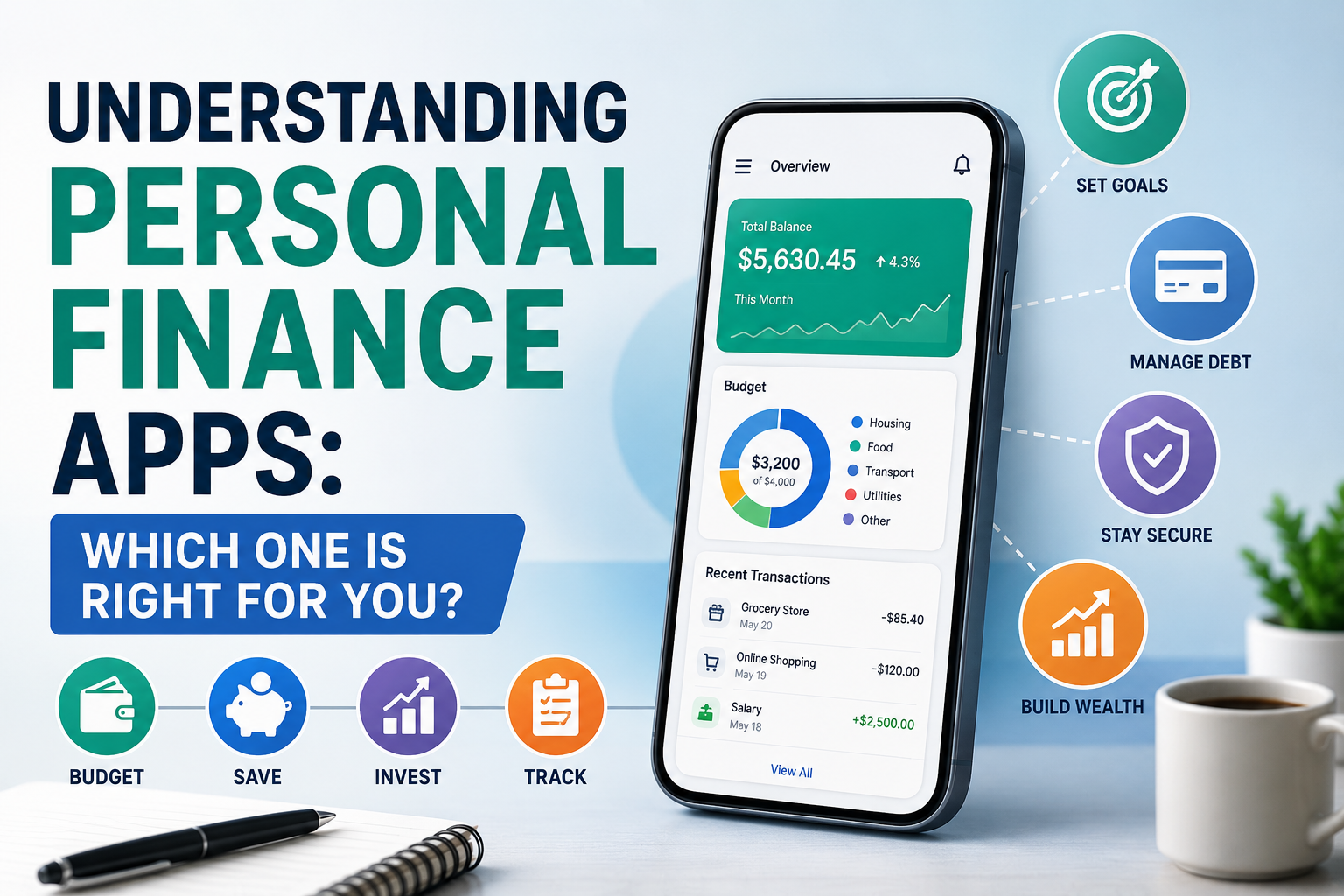
In today’s digital world, managing money has become easier than ever. Gone are the days when people relied solely on spreadsheets, notebooks, or bank statements to track their finances. Personal finance apps now offer powerful tools that help users monitor spending, create budgets, save money, invest wisely, and achieve financial goals.
With hundreds of finance apps available, choosing the right one can feel overwhelming. Each app offers unique features, pricing models, and benefits. Understanding how these apps work and identifying your financial needs can help you make the best decision.
This guide explores personal finance apps, their benefits, key features, and how to select the right app for your financial journey.
What Are Personal Finance Apps?
Personal finance apps are software applications designed to help individuals manage their money. These apps typically connect to bank accounts, credit cards, investment portfolios, and other financial accounts to provide a complete overview of financial health.
Most personal finance apps automate financial tracking and offer insights into spending habits, savings progress, debt management, and investment performance.
Whether you’re trying to create a budget, reduce debt, increase savings, or build wealth, a personal finance app can simplify the process.
Why Personal Finance Apps Have Become So Popular
The popularity of personal finance apps has grown significantly over the past decade. Several factors contribute to this trend:
Convenience
Users can access financial information anytime and anywhere using smartphones, tablets, or computers.
Real-Time Financial Tracking
Many apps provide instant updates on transactions, balances, and spending activity.
Better Budget Management
Automated budgeting tools make it easier to monitor expenses and stick to spending limits.
Financial Goal Setting
Users can establish savings goals and track progress toward achieving them.
Investment Monitoring
Many finance apps allow users to view investment portfolios alongside everyday finances.
Improved Financial Awareness
Visual charts and reports help users understand spending patterns and make informed decisions.
Key Features to Look for in a Personal Finance App
Before selecting an app, it’s important to understand the features that matter most.
Budgeting Tools
A strong budgeting feature allows users to:
- Categorize expenses
- Set spending limits
- Monitor monthly budgets
- Receive overspending alerts
Expense Tracking
Expense tracking helps users understand where their money goes each month.
Look for apps that automatically categorize transactions and generate detailed spending reports.
Goal-Based Savings
Many apps help users save for:
- Emergency funds
- Vacations
- Home purchases
- Education expenses
- Retirement
Goal tracking can provide motivation and accountability.
Bill Management
Bill reminder features reduce the risk of late payments and associated fees.
Some apps even allow users to schedule payments directly.
Debt Reduction Planning
Debt management tools can help users:
- Track balances
- Monitor interest rates
- Create payoff strategies
- Visualize debt reduction progress
Investment Tracking
Investment monitoring allows users to track:
- Stocks
- Mutual funds
- ETFs
- Retirement accounts
- Cryptocurrency holdings
Security Features
Since financial information is highly sensitive, strong security measures are essential.
Look for:
- Bank-level encryption
- Two-factor authentication
- Biometric login
- Fraud monitoring
Different Types of Personal Finance Apps
Not all finance apps serve the same purpose. Understanding the categories can help narrow your choices.
Budgeting Apps
These apps focus primarily on helping users manage spending and create budgets.
Best for:
- Individuals looking to control expenses
- First-time budgeters
- Families managing household finances
Expense Tracking Apps
Expense trackers provide detailed spending analysis without complex budgeting systems.
Best for:
- Users wanting spending awareness
- Freelancers tracking business expenses
Savings Apps
Savings-focused apps encourage automated saving through round-ups, recurring transfers, and goal tracking.
Best for:
- New savers
- Individuals building emergency funds
Debt Management Apps
These apps focus on reducing loans, credit card balances, and other debts.
Best for:
- Users with multiple debts
- Individuals seeking structured repayment plans
Investment Apps
Investment-focused platforms help users manage portfolios and track wealth growth.
Best for:
- Investors
- Retirement planners
- Long-term wealth builders
Comprehensive Financial Management Apps
These apps combine budgeting, saving, debt tracking, and investing in one platform.
Best for:
- Users seeking an all-in-one financial solution
How to Choose the Right Personal Finance App
Choosing the best app depends on your financial goals and habits.
Identify Your Primary Goal
Ask yourself:
- Do I need help budgeting?
- Am I trying to save money?
- Do I want to pay off debt?
- Am I focused on investing?
- Do I need complete financial management?
Your answer will guide your selection.
Consider Ease of Use
An app should simplify financial management rather than complicate it.
Look for:
- Clean interface
- Easy navigation
- Clear reports
- Simple setup process
Check Account Compatibility
Ensure the app supports:
- Your bank accounts
- Credit cards
- Investment accounts
- Digital payment services
Evaluate Security Standards
Security should always be a top priority.
Research the app’s:
- Encryption methods
- Privacy policies
- Data-sharing practices
Understand Pricing
Some apps are free, while others require monthly or annual subscriptions.
Compare:
- Features offered
- Subscription costs
- Premium upgrades
- Free trial availability
Read User Reviews
Customer reviews often reveal valuable information about:
- Reliability
- Customer support
- Performance issues
- User satisfaction
Personal Finance Apps for Different Financial Goals
For Budgeting Beginners
If you’re new to personal finance, choose an app that focuses on:
- Simple budgeting
- Spending categories
- Monthly reports
Avoid overly complex tools at first.
For Debt Reduction
Choose apps with:
- Debt snowball calculators
- Debt avalanche planning
- Progress tracking
- Interest analysis
For Savers
Look for:
- Automatic transfers
- Goal visualization
- Savings challenges
- Round-up features
For Investors
Consider apps offering:
- Portfolio tracking
- Investment analysis
- Retirement projections
- Asset allocation insights
For Families
Family-focused finance apps often provide:
- Shared budgets
- Multiple user access
- Household spending reports
- Joint savings goals
Benefits of Using Personal Finance Apps
Improved Financial Discipline
Regular tracking encourages smarter spending decisions.
Better Savings Habits
Automation removes the guesswork from saving money.
Increased Financial Awareness
Users gain a clearer understanding of income and expenses.
Reduced Financial Stress
Having a complete picture of finances can improve confidence and decision-making.
Faster Goal Achievement
Tracking progress helps users stay motivated and focused.
Common Mistakes When Using Personal Finance Apps
Ignoring Financial Reports
Many users download an app but never review the insights it provides.
Not Updating Financial Goals
Goals should evolve as income and priorities change.
Choosing Too Many Apps
Using multiple finance apps can create confusion and duplicate information.
Focusing Only on Tracking
Tracking is important, but action is what creates results.
Use insights to:
- Reduce spending
- Increase savings
- Eliminate debt
- Improve investments
Neglecting Security Settings
Always enable:
- Two-factor authentication
- Strong passwords
- Biometric security features
Future Trends in Personal Finance Apps
Technology continues to transform personal finance management.
Emerging trends include:
Artificial Intelligence
AI-powered recommendations can provide personalized financial advice.
Predictive Budgeting
Apps increasingly predict future expenses and cash flow needs.
Automated Investing
Robo-advisors continue making investing more accessible.
Open Banking Integration
Users gain a more comprehensive view of finances through secure account connections.
Financial Wellness Platforms
Future apps may combine budgeting, investing, education, and financial coaching into unified ecosystems.
Final Thoughts
Personal finance apps have revolutionized the way people manage money. Whether your goal is budgeting, saving, debt reduction, investing, or overall financial wellness, there’s likely an app designed specifically for your needs.
The right personal finance app is not necessarily the one with the most features—it’s the one that aligns with your financial goals, habits, and lifestyle. Take time to evaluate your priorities, compare available options, and choose a solution that makes financial management easier and more effective.
When used consistently, a personal finance app can become a valuable tool for building stronger financial habits, reducing stress, and creating a more secure financial future.
Natalie Kingsley is the lead author and primary contributor at Fundznests.com. She is passionate about financial education and dedicated to helping readers build confidence in managing their money, growing their wealth, and achieving long-term financial goals.
With a strong interest in personal finance, investing, retirement planning, and wealth-building strategies, Natalie creates informative and practical content designed for both beginners and experienced investors. Her writing focuses on breaking down complex financial concepts into clear, actionable insights that readers can apply to their everyday financial lives.