
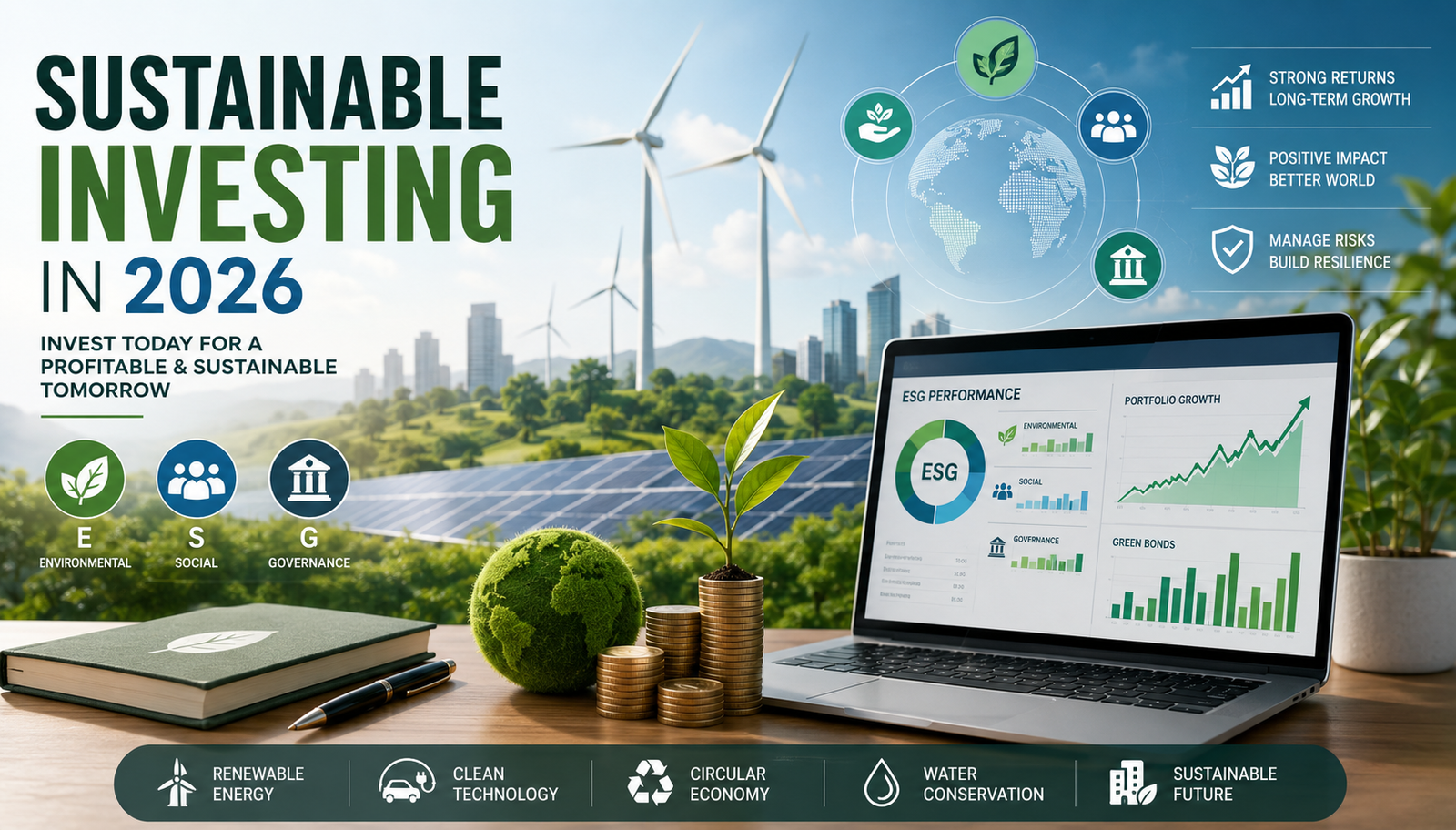
Sustainable investing has evolved from a niche investment strategy into a mainstream financial movement. In 2026, investors are no longer focused solely on profits. They are increasingly considering how their investments affect the environment, society, and corporate governance. This shift has created significant opportunities for individuals and institutions seeking both financial returns and positive impact.
As climate concerns, social responsibility, and corporate transparency continue to shape global markets, sustainable investing is becoming a critical component of long-term wealth-building strategies. Whether you are a beginner investor or an experienced portfolio manager, understanding sustainable investing in 2026 can help you make informed decisions that align with your values and financial goals.
This comprehensive guide explores the latest trends, benefits, challenges, and strategies associated with sustainable investing in 2026.
What Is Sustainable Investing?
Sustainable investing is an investment approach that incorporates Environmental, Social, and Governance (ESG) factors into financial decision-making.
The goal is to generate competitive financial returns while supporting positive societal and environmental outcomes.
Environmental Factors
Environmental considerations include:
- Climate change initiatives
- Carbon emissions reduction
- Renewable energy adoption
- Water conservation
- Waste management
- Sustainable resource usage
Social Factors
Social considerations evaluate:
- Employee treatment
- Workplace diversity
- Human rights practices
- Community engagement
- Consumer protection
- Supply chain ethics
Governance Factors
Governance factors focus on:
- Board diversity
- Executive compensation
- Corporate transparency
- Ethical business practices
- Shareholder rights
- Regulatory compliance
Companies that score well in these areas are often viewed as more sustainable and potentially better positioned for long-term success.
Why Sustainable Investing Is Growing in 2026
Several powerful trends are driving the rapid growth of sustainable investing.
Increased Climate Awareness
Extreme weather events, rising temperatures, and environmental challenges have increased public awareness about climate risks. Investors are paying closer attention to how companies manage environmental responsibilities.
Regulatory Developments
Governments worldwide are implementing stricter sustainability disclosure requirements. These regulations are making ESG information more accessible and transparent for investors.
Consumer Preferences
Consumers increasingly support companies that demonstrate environmental and social responsibility. Businesses adapting to these preferences often enjoy stronger brand loyalty and competitive advantages.
Institutional Adoption
Major pension funds, insurance companies, and asset managers are allocating larger portions of their portfolios toward sustainable investments.
Technological Innovation
Advancements in clean energy, electric vehicles, carbon capture, and sustainable agriculture have created attractive investment opportunities.
Key Sustainable Investing Trends in 2026
1. Climate-Focused Investments
Climate investing remains one of the strongest trends in 2026.
Investors are actively seeking opportunities in:
- Solar energy
- Wind energy
- Battery technology
- Green hydrogen
- Electric vehicles
- Carbon reduction technologies
Companies helping the world transition toward lower carbon emissions are attracting substantial investment capital.
2. ESG Data Becomes More Reliable
One criticism of ESG investing has been inconsistent ratings and reporting standards.
In 2026, improved regulations and standardized reporting frameworks are helping investors access more accurate sustainability data.
This increased transparency allows investors to make more informed decisions.
3. Impact Investing Expansion
Impact investing goes beyond ESG screening by intentionally targeting measurable social or environmental outcomes.
Popular impact sectors include:
- Affordable housing
- Clean water access
- Healthcare innovation
- Sustainable agriculture
- Education technology
Investors increasingly want to see tangible positive outcomes alongside financial returns.
4. Green Bonds Continue to Grow
Green bonds finance projects that benefit the environment.
Examples include:
- Renewable energy projects
- Sustainable transportation systems
- Energy-efficient infrastructure
- Water management programs
Green bonds are becoming a popular option for income-focused investors seeking sustainability exposure.
5. Artificial Intelligence Enhances ESG Analysis
AI-powered analytics tools are transforming how investors evaluate sustainability metrics.
Advanced algorithms can analyze:
- Corporate reports
- Regulatory filings
- News articles
- Social media sentiment
- Environmental impact data
These technologies help investors identify sustainable opportunities more efficiently.
Benefits of Sustainable Investing
Potential Long-Term Growth
Many sustainable companies focus on innovation and future-oriented business models.
These organizations may be better positioned to capitalize on emerging market trends.
Risk Reduction
Companies with strong ESG practices often demonstrate better risk management.
Potential benefits include:
- Reduced regulatory risk
- Lower reputational risk
- Improved operational efficiency
- Stronger stakeholder relationships
Alignment With Personal Values
Many investors appreciate the opportunity to support causes they care about while building wealth.
Sustainable investing allows individuals to align their financial decisions with personal beliefs.
Enhanced Corporate Accountability
Investor demand for sustainability encourages businesses to improve environmental practices, labor standards, and governance structures.
Access to Emerging Industries
Sustainable investing provides exposure to fast-growing sectors such as renewable energy, clean technology, and sustainable infrastructure.
Common Sustainable Investment Options
ESG Mutual Funds
ESG mutual funds invest in companies that meet specific sustainability criteria.
Benefits include:
- Professional management
- Diversification
- Easy accessibility
ESG Exchange-Traded Funds (ETFs)
ESG ETFs have become increasingly popular because they offer:
- Lower costs
- Broad diversification
- High liquidity
- Transparency
Individual Stocks
Investors can directly purchase shares of companies with strong sustainability practices.
Examples may include firms involved in:
- Renewable energy
- Electric vehicles
- Sustainable consumer products
- Green technology
Green Bonds
Green bonds provide fixed-income exposure while supporting environmentally beneficial projects.
Impact Investment Funds
These specialized funds target investments that generate measurable social or environmental outcomes.
Challenges of Sustainable Investing
While sustainable investing offers many advantages, investors should understand potential challenges.
Greenwashing
Greenwashing occurs when companies exaggerate or misrepresent their sustainability efforts.
Investors should conduct thorough research rather than relying solely on marketing materials.
Inconsistent ESG Ratings
Although reporting standards are improving, ESG ratings can still vary between providers.
Different methodologies may produce different evaluations of the same company.
Limited Historical Data
Some emerging sustainable industries have shorter operating histories, making long-term performance evaluation more difficult.
Market Volatility
Sustainable investments remain subject to normal market risks and economic fluctuations.
Investors should maintain realistic expectations regarding performance.
How to Evaluate Sustainable Investments in 2026
Examine ESG Reports
Review company sustainability reports to understand:
- Environmental goals
- Diversity initiatives
- Governance policies
- Carbon reduction plans
Analyze Financial Fundamentals
Strong sustainability credentials should complement—not replace—solid financial performance.
Consider:
- Revenue growth
- Profitability
- Debt levels
- Competitive position
Look for Third-Party Verification
Independent certifications and ESG ratings can provide additional insights into sustainability claims.
Assess Long-Term Strategy
Companies with clear sustainability roadmaps often demonstrate stronger commitment than those making vague promises.
Diversify Your Portfolio
Diversification remains essential regardless of investment strategy.
A balanced portfolio can help reduce overall investment risk.
Best Sectors for Sustainable Investing in 2026
Renewable Energy
Renewable energy continues to attract strong investor interest due to global decarbonization efforts.
Electric Transportation
Electric vehicle manufacturers, charging infrastructure providers, and battery technology companies remain important growth areas.
Sustainable Agriculture
Innovative agricultural technologies are helping improve food production while reducing environmental impact.
Water Management
Water scarcity concerns are driving investment opportunities in conservation and treatment technologies.
Energy Efficiency
Businesses focused on reducing energy consumption and improving efficiency are expected to benefit from growing demand.
Circular Economy Solutions
Companies promoting recycling, reuse, and waste reduction are becoming increasingly attractive to investors.
Sustainable Investing Strategies
Negative Screening
This approach excludes companies involved in controversial industries such as:
- Tobacco
- Weapons
- Fossil fuels
- Gambling
Positive Screening
Positive screening focuses on selecting companies with strong ESG performance.
Best-in-Class Investing
Investors choose industry leaders based on sustainability performance within specific sectors.
Thematic Investing
Thematic strategies target sustainability-related trends such as:
- Clean energy
- Water conservation
- Green infrastructure
Impact Investing
Impact investing seeks measurable social or environmental benefits alongside financial returns.
The Future of Sustainable Investing
The future of sustainable investing appears promising.
Several developments are expected to shape the market beyond 2026:
- Greater ESG reporting standardization
- Increased climate-related disclosures
- Expansion of green finance products
- Growth in renewable energy investments
- Enhanced AI-driven sustainability analysis
- Stronger stakeholder expectations
As sustainability becomes increasingly integrated into business operations, investors may find more opportunities to achieve both financial and societal objectives.
Tips for New Sustainable Investors
If you are just getting started, consider the following tips:
- Define your sustainability priorities.
- Research ESG funds and ETFs.
- Understand risk tolerance.
- Diversify across sectors and asset classes.
- Monitor investment performance regularly.
- Stay informed about sustainability trends.
- Avoid making decisions based solely on ESG labels.
A disciplined approach can help maximize both financial returns and positive impact.
Conclusion
Sustainable investing in 2026 is no longer simply a trend—it is becoming a fundamental part of modern investing. As environmental concerns, social responsibility, and corporate accountability gain importance, investors have more opportunities than ever to align their portfolios with their values.
Whether through ESG funds, green bonds, renewable energy stocks, or impact investing strategies, sustainable investing offers a pathway toward building wealth while supporting positive change. By understanding the opportunities, risks, and evolving landscape, investors can make smarter decisions that benefit both their financial future and the world around them.
As the global economy continues its transition toward sustainability, those who embrace informed and strategic sustainable investing may be well-positioned to thrive in the years ahead.
Natalie Kingsley is the lead author and primary contributor at Fundznests.com. She is passionate about financial education and dedicated to helping readers build confidence in managing their money, growing their wealth, and achieving long-term financial goals.
With a strong interest in personal finance, investing, retirement planning, and wealth-building strategies, Natalie creates informative and practical content designed for both beginners and experienced investors. Her writing focuses on breaking down complex financial concepts into clear, actionable insights that readers can apply to their everyday financial lives.